Monthly rental fits any job where the finish date is measured in weeks, not hours: a foundation-to-final build in Rose Park or Glendale, a whole-house gut remodel in Yalecrest or Liberty Wells, a multi-phase infill…
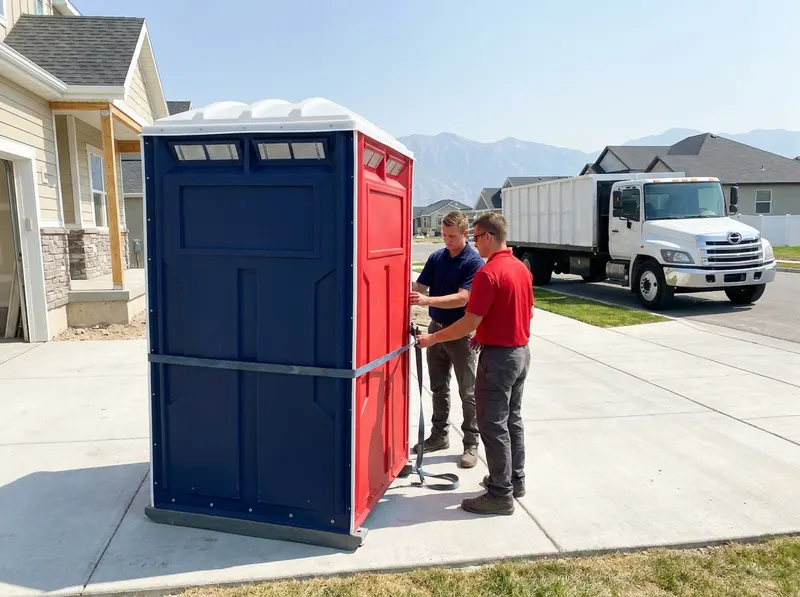
Monthly rental fits any job where the finish date is measured in weeks, not hours: a foundation-to-final build in Rose Park or Glendale, a whole-house gut remodel in Yalecrest or Liberty Wells, a multi-phase infill project off 2100 South in Sugar House, or a fenced equipment yard near Fairpark that a crew rotates through all season. The alternative — a short-term or weekend rental — makes sense for a wedding, a block party or a two-day punch-list push, and it is priced per event rather than per month. The trade-off is simple: event rentals cost less overall because they're brief, but if you keep re-booking one every week you will pay more and re-explain the placement every time. Monthly rental locks in one placement, one recurring service day, and one predictable invoice.
The two things that actually fail on long-term rentals are placement and service reliability, so those are the two things we spec first. Placement matters more the longer a unit sits. We ask for the spot you want and the route to it, because a unit dropped where it blocks a material lane or a driveway on a narrow Capitol Hill or Marmalade District street gets moved by hand on day two, and that is how doors get damaged and tanks get sloshed. Steep grades in The Avenues, gravel and soft ground along the Jordan River Parkway corridor, and tight alley access behind older East Central and Poplar Grove properties all change what truck and approach we send. Tell us the access constraint before delivery and we plan around it instead of improvising in front of your crew.
Service cadence is set by headcount and hours, not by guesswork. A common baseline in this trade is one unit per roughly 10 workers on a 40-hour week with weekly service; heavier headcounts, longer shifts, or a unit that also serves inspectors and subs usually justify a second unit or a second service visit per week. We will give you a units-per-headcount and site-access recommendation for your specific use case rather than leaving you to guess. Every service visit is logged and you can get an arrival notification, which is the whole point — the complaint we hear most about long-term units is a skipped service day nobody admitted to. Winter changes the routine along the Wasatch Front: units get treated for cold weather, service routes shift after storms, and we tell you when a Salt Lake City snow day moves your visit rather than letting you find out by walking up to a full unit.
Upgrades are worth considering when a unit will be on site for months. A flushing unit with a sink or a separate hand-wash station reads better to inspectors and to homeowners living through a remodel in Ballpark or Liberty Wells. An ADA-accessible unit is the right call on public-facing or municipal-adjacent work near Liberty Park, Sugar House Park or the University of Utah area. Rentals are month-to-month — extend by phone, add a second unit mid-project, or schedule pickup when the job closes out, and we confirm each change in writing before anything moves. Clean units, exact spot, on schedule: (801) 306-0571.
Every job gets a firm, written price after a free on-site visit.
Tell us about your long-term monthly portable toilet rental job in Salt Lake City and we'll send a clear, written quote — usually the same day.
 CleanVertex Porta Potty Solutions