A hand-wash station fits whenever water — not just gel — is the point. Caterers plating in a Yalecrest backyard, food vendors at a Liberty Park gathering, concrete and drywall crews washing grit off forearms before…
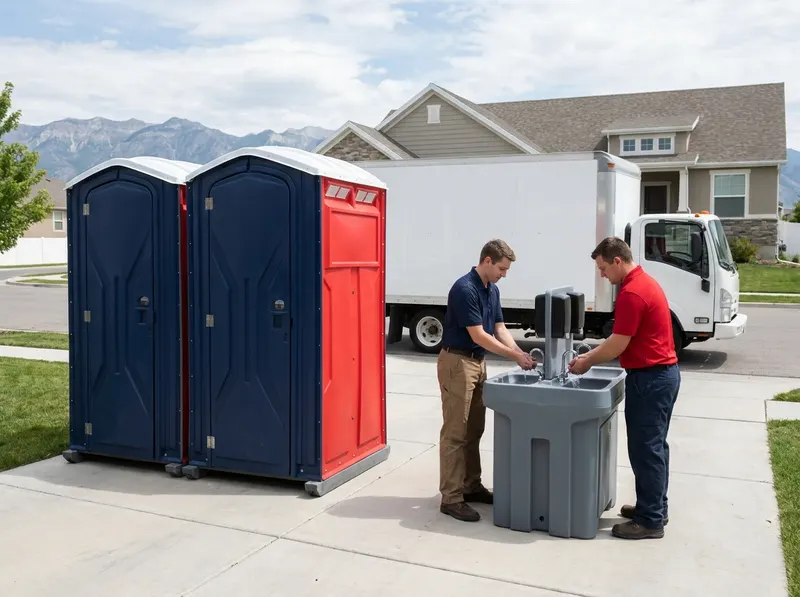
A hand-wash station fits whenever water — not just gel — is the point. Caterers plating in a Yalecrest backyard, food vendors at a Liberty Park gathering, concrete and drywall crews washing grit off forearms before lunch, and farm or film crews with no plumbing anywhere near the set all need a sink with soap and running water. Sanitizer stands are the cheaper alternative, and they are the wrong tool once hands are actually dirty — alcohol gel does nothing for mud, mortar dust, or grease. The trade-off is straightforward: a sanitizer stand costs a fraction of a sink and never runs out of water, while a sink station carries a finite fresh-water tank and needs a refill trip if usage is heavy. For a 40-guest reception, one two-basin station usually holds the weekend. For a 300-person festival day in the Fairpark or Ballpark area, plan on multiple stations plus a mid-event refill built into the order.
Placement is where these units succeed or fail, and Salt Lake City lots make it specific. In The Avenues and on Capitol Hill, the streets are narrow and the grades are steep — a sink station needs a level pad, because a tilted tank drains unevenly and the greywater catch sits wrong. Marmalade District and East Central alleys often mean the truck stops short and we walk the unit in, so tell us about gates, stairs and locked side yards up front. On Rose Park, Glendale and Poplar Grove job sites we typically set the station just inside the fence line near the crew's entry point, not next to the restroom bank, so nobody has to cross an active work zone to wash up. For Sugar House and Liberty Wells events, we keep sinks off irrigated turf and on hard surface where possible, which protects the lawn and keeps the unit stable. We mark the exact spot on your written confirmation and set it there, rather than guessing when the driver arrives.
Winter changes the recommendation, and honesty beats a surprise. Salt Lake County nights drop below freezing for much of November through March, and a gravity-fed sink with standing water in the line will freeze. For cold-weather work we either place the station inside a heated space, drain and winterize it between uses, or advise a sanitizer stand instead — a frozen faucet is not a service anyone should pay for. Canyon-adjacent and limited-access sites are workable, but the road condition and turnaround decide the truck we send, so mention it when you call. Runoff matters too: greywater from a hand-wash station goes back on the truck. Sites along the Jordan River Parkway Trail corridor and anything near a park drain get extra attention on that point.
Most customers pair sinks with restrooms — a common job-site ratio is one hand-wash station per bank of two to four units, adjusted for how many people are on site and whether food is served. Remodel customers in Sugar House and Liberty Wells whose kitchen is gutted often rent a single station for the duration of the build. Wedding and event planners generally want one station near the catering tent and one near the restroom trailer or unit cluster. Tell us the use case and headcount and we'll spec the quantity rather than upselling a number. Clean units, exact spot, on schedule — service days published, arrival notifications sent, quantities in writing. See the full service lineup on our homepage, or call (801) 306-0571 and we'll confirm the exact price on a free on-site visit.
Every job gets a firm, written price after a free on-site visit.
Tell us about your hand-wash station rental job in Salt Lake City and we'll send a clear, written quote — usually the same day.
 CleanVertex Porta Potty Solutions